

Pre-Season Fitness
How do I set myself up for success at JIRP?
The absolute best way to prepare physically for JIRP is to train well in the winter and spring before the Expedition. Mountaineers become fit by doing rigorous cardiovascular training, rigorous strength training, and rigorous flexibility training. Individuals who are very fit are far less likely to require evacuation and early separation from the program. Please protect your investment in this summer’s expedition by taking fitness seriously.
Developing a Fitness Plan
Getting in shape for JIRP can be a daunting task, but it's doable with enough time. The good news is that by working every day during the summer we get fit and stay fit - so once the program starts you don't need to worry at all. In order to arrive for JIRP ready to hit the ground running (so to speak), you should think about both your cardiovascular fitness and your muscular fitness. It helps many people to have a goal to work towards. For all participants, the training goal is the hike from Juneau up to our first field camp, Camp 17. We'll all do this hike at the end of Orientation.
With that hike in mind, we put together a handout full of advice on creating a fitness plan for JIRP. It includes information about the hike to Camp 17, a sample schedule, and links to resources with mountaineering-specific fitness exercises. We highly recommend starting the training process early so you can figure out what activities work best for you and stick to them.
Your training goal: To feel good the day after the first hike to the edge of the Icefield
Juneau is at sea level and Camp 17 is at about 4500 ft./1400 m elevation, right at the edge of the Juneau Icefield. The good news here is that the altitude itself won't be a problem - the lower limit for altitude sickness is usually around 5,000 ft./1500 m elevation. The other good news is that we get to hike up that elevation all in one day. 4900 ft./1500 m of vertical elevation gain while hiking is a serious undertaking for most people with a full backpack, even veteran hikers. About half of the elevation will be covered in the first mile, so be prepared for a steep start. The rest of the hike is along Blackerby Ridge, with sweeping views of Juneau and temperate rain forest below you.
Ski mountaineering is a gear-intensive pursuit, and backpacks tend to get heavy. We will use a helicopter to transport your skis and boots from Juneau up to Camp 17, but you will have to carry your clothing, your food and water, your mountaineering safety equipment (harness, helmet, carabiners), your camping equipment, and the rest of the “10 Essentials” (the items we never leave camp without). Backpacks for the hike up to Camp 17 can be up to 30-50% of body weight - again, heavy, but not impossibly heavy.
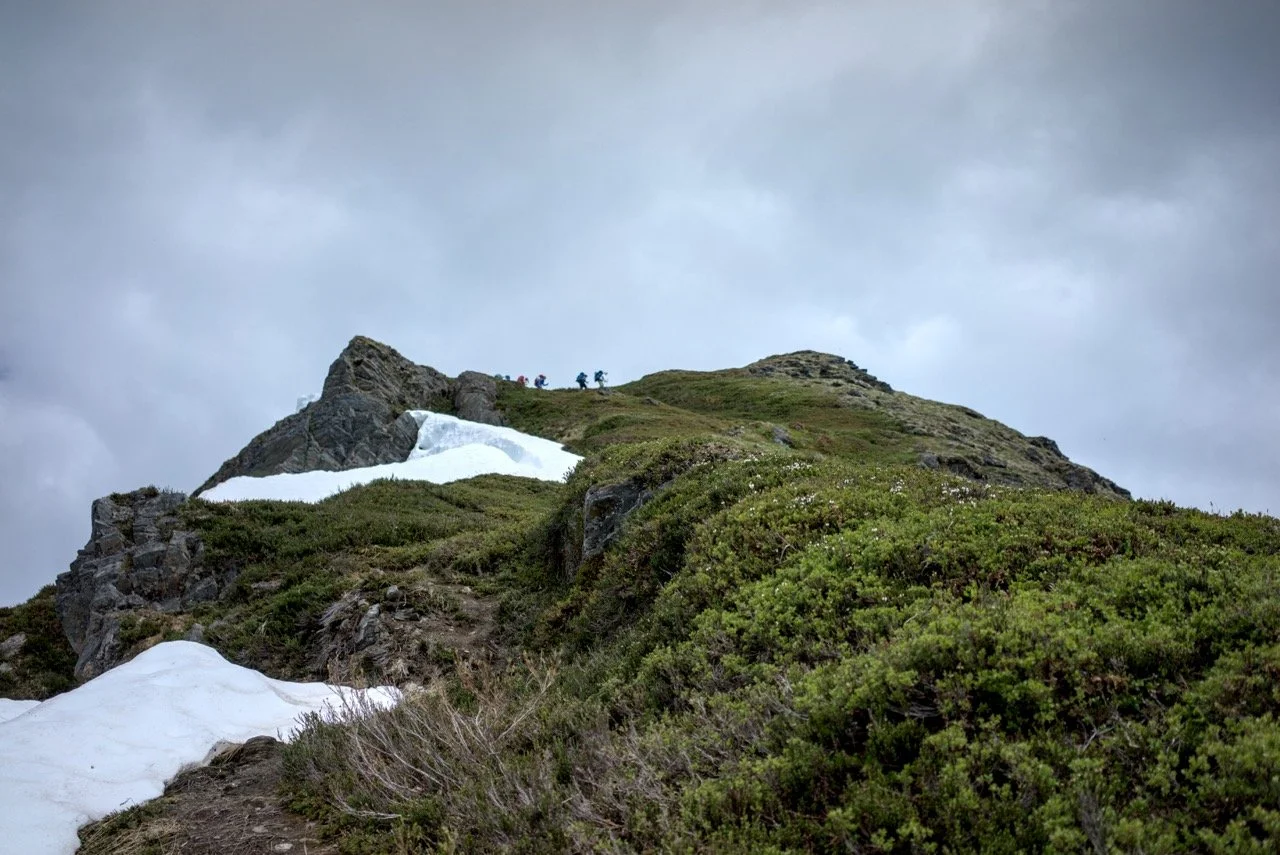
A particularly steep section of the Blackerby Ridge hike. Picture by 2023 student Harold Oppenheim.
Blackerby Ridge Hike Stats
Distance: 6.1 miles/ 9.9 kilometers
Total elevation gain: 4900 ft/1500 m
Pack weight: 30-50% of body weight
Time on trail: 7-12 hours
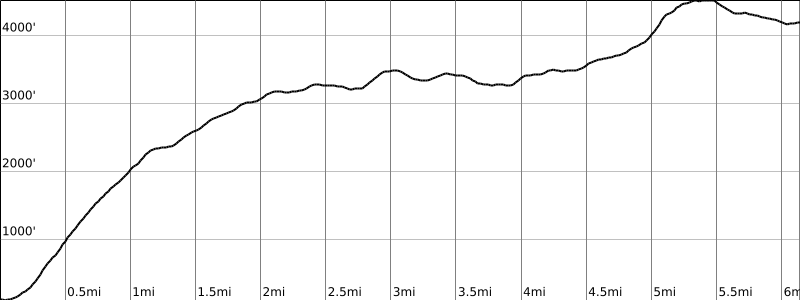
This is the elevation profile of Blackerby Ridge to Camp 17. Note that most hiking apps stop the hike at the highest point, Cairn Peak, so do not factor in the additional ~0.75 mile to Camp 17.
How to Train
Everyone trains differently for an expedition like JIRP, but we suggest you focus on both cardiovascular fitness and muscular fitness. If you live near some mountains, the very best thing you can do to train is to load up a backpack and go hiking! Start with just a day pack (10-15 lbs.) and a short hike, and work your way up towards a pack that is ~30% of your body weight and a day that covers 6 mi/9.5 km and 4900 ft/1500m. If you do this, you will be ready for JIRP.
If you don't live near mountains, you can still get in shape for the first hike. Pick your favorite cardio exercise (running, biking, swimming, rowing, etc.) and work up to doing it 3-5 days/week. Start easy now, and work your way up to a faster pace and more distance. Note: running stairs is a classic and effective urban training tool for mountaineering. Check out your university/college stadium, they often have great staircases!
In addition to cardiovascular fitness, think about muscular fitness. If you're an experienced weight lifter, great! Focus on legs and core strength. If you're not an experienced weightlifter (many of us aren't), think about checking out your local climbing gym. Indoor climbing is great strength training, can be a lot of fun, and might even help you meet fun people who do trips similar to JIRP. If that's not up your alley, do some research on what might be more appealing. Crossfit, P90X, 80s fitness videos off YouTube, whatever works for you.
Training for a mountaineering trip when you’re not in the mountains requires a bit of ingenuity, but you’re following well-worn footsteps. Get creative! We’ve even seen mountaineers training at the gym, walking on the treadmill set to “uphill” at slow speed with a backpack on. Every day of training you put in this winter and spring will make the first weeks of JIRP that much less tiring.
Read through the Fitness Training Handout. It includes a training plan and more detailed instructions to help you get started.
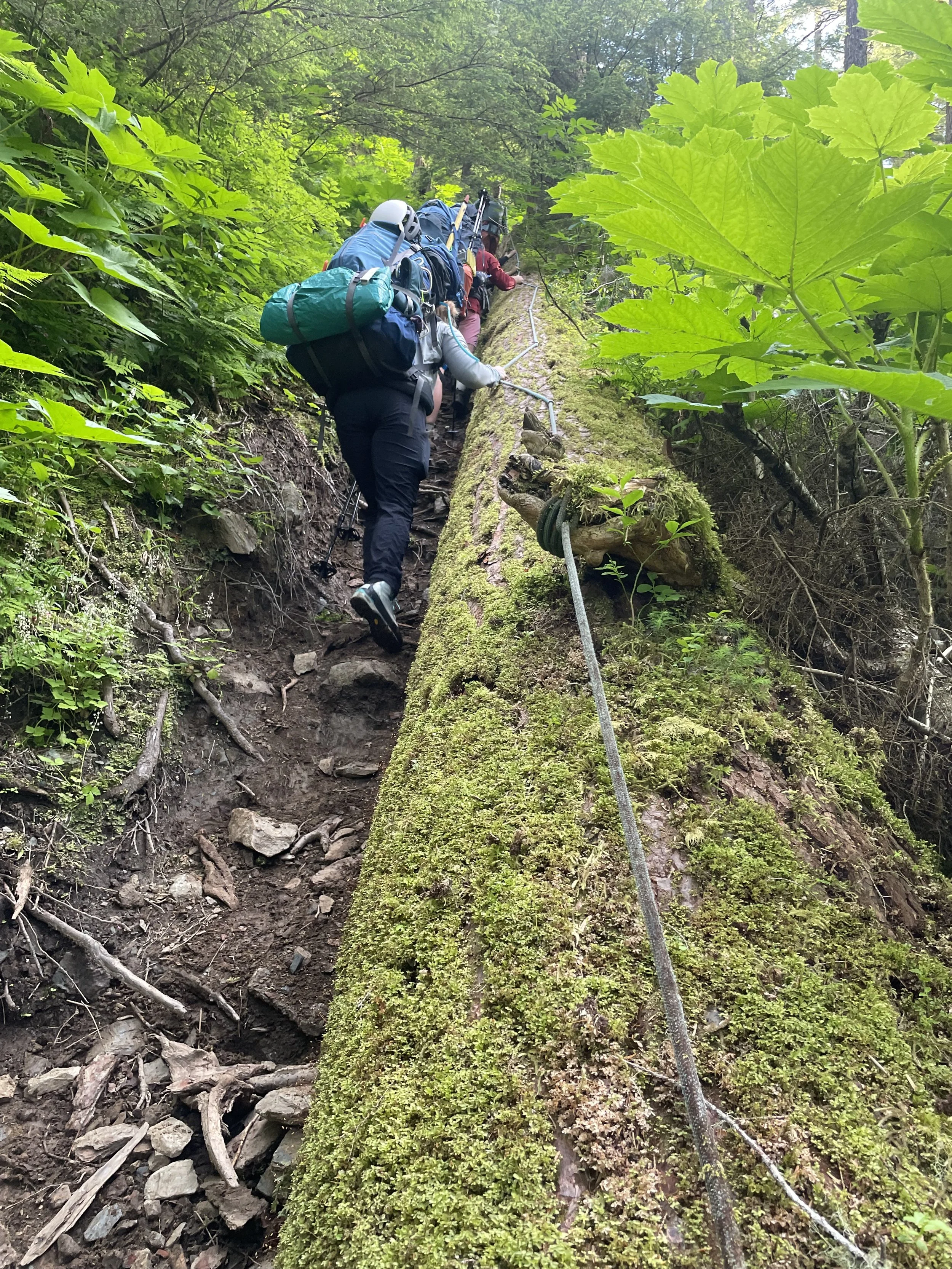
The first mile of the Blackerby Ridge hike has two sections with rope handholds. When the trail is wet, as it often is, the ropes keep you from falling backwards down the muddy slip-n-slide of a trail.