
Graduate Field Course Information
What is the Graduate Field Course?
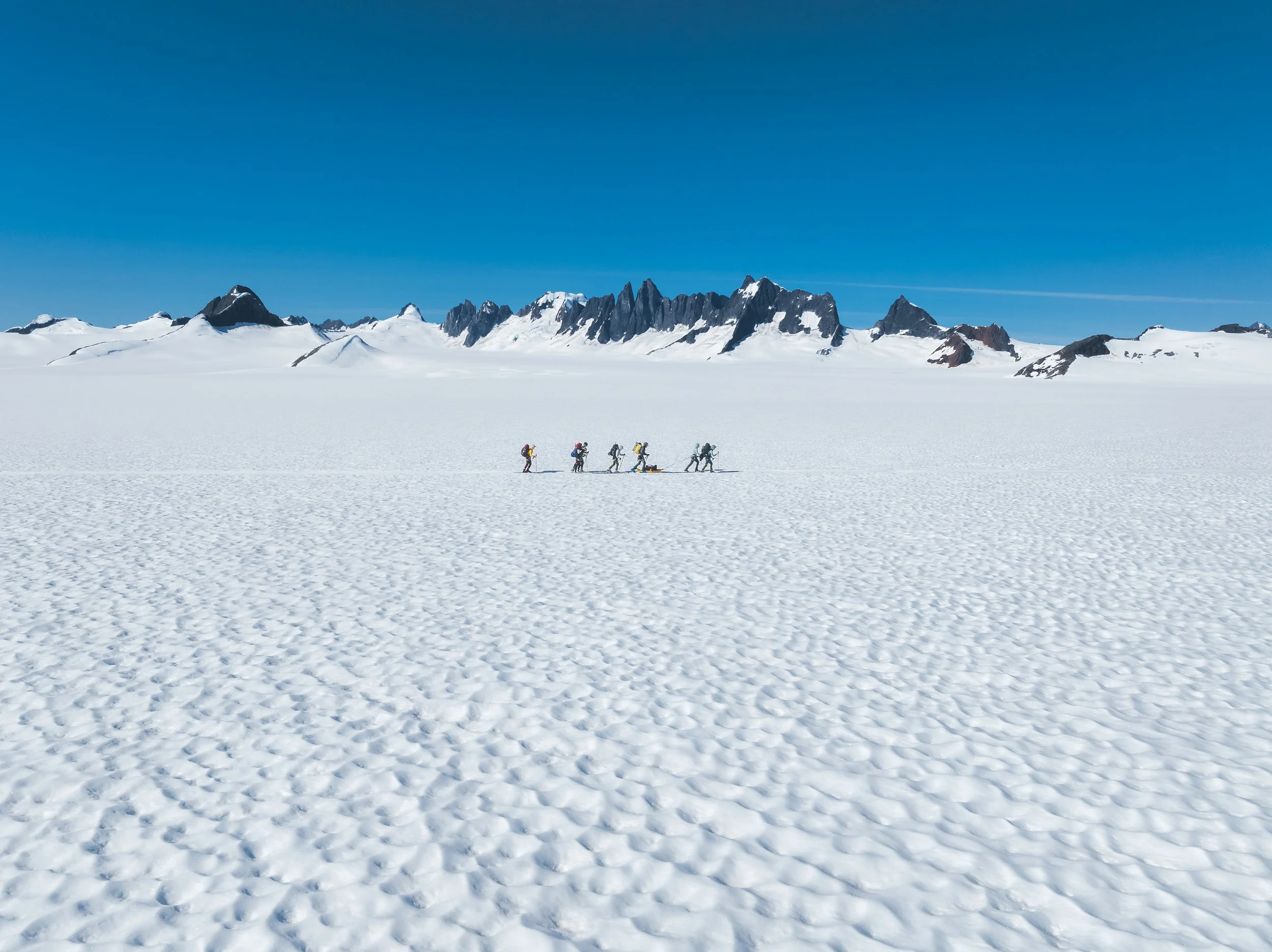
JIRP’s new Graduate Field Course is a 1-month academic and research experience for graduate-level Earth science students interested in cryosphere science and field skills training.
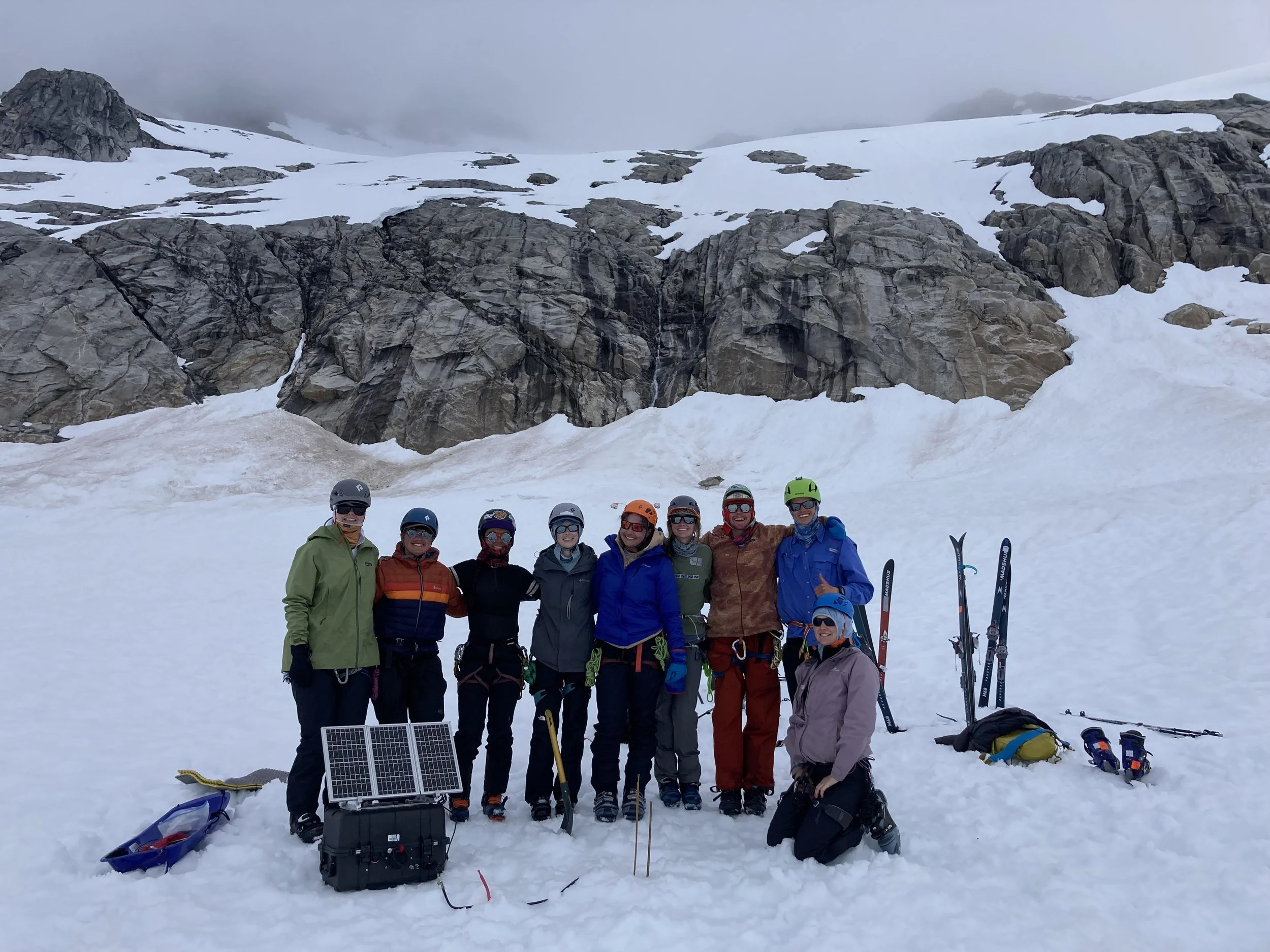
The Field Course will work in parallel with a variety of research teams who use JIRP facilities for their field campaigns. Participants will be embedded with research teams and fellow graduate students to further their mentorship and training goals.
Because this is a new course, it may look a bit different from year to year. If you’d like to be notified with additional details about the 2027 season, please fill out the Interest Form below.

Polar Earth Systems Science & Field Skills
About the Course
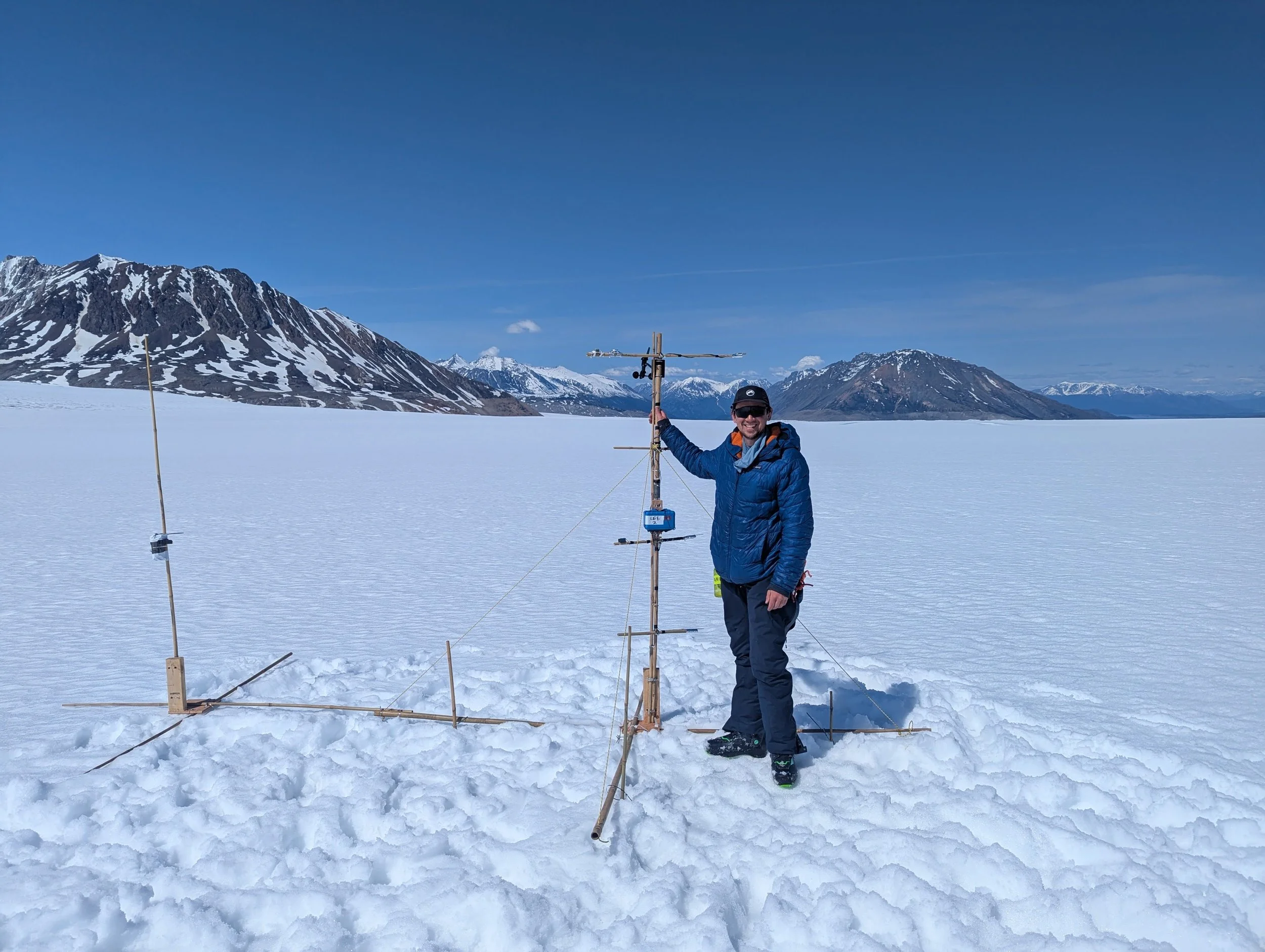
The JIRP Graduate Course broadly covers Polar Earth Systems science and includes mountain and glacier safety training. We will teach students how to do field work in glacial environments competently and efficiently so they can understand and contribute to a range of funded projects related to atmospheric sciences, glaciology, snow and firn science, microbiology, geophysics, and remote sensing. To meet this goal, JIRP will teach both field research skills and mountain and glacier travel skills.
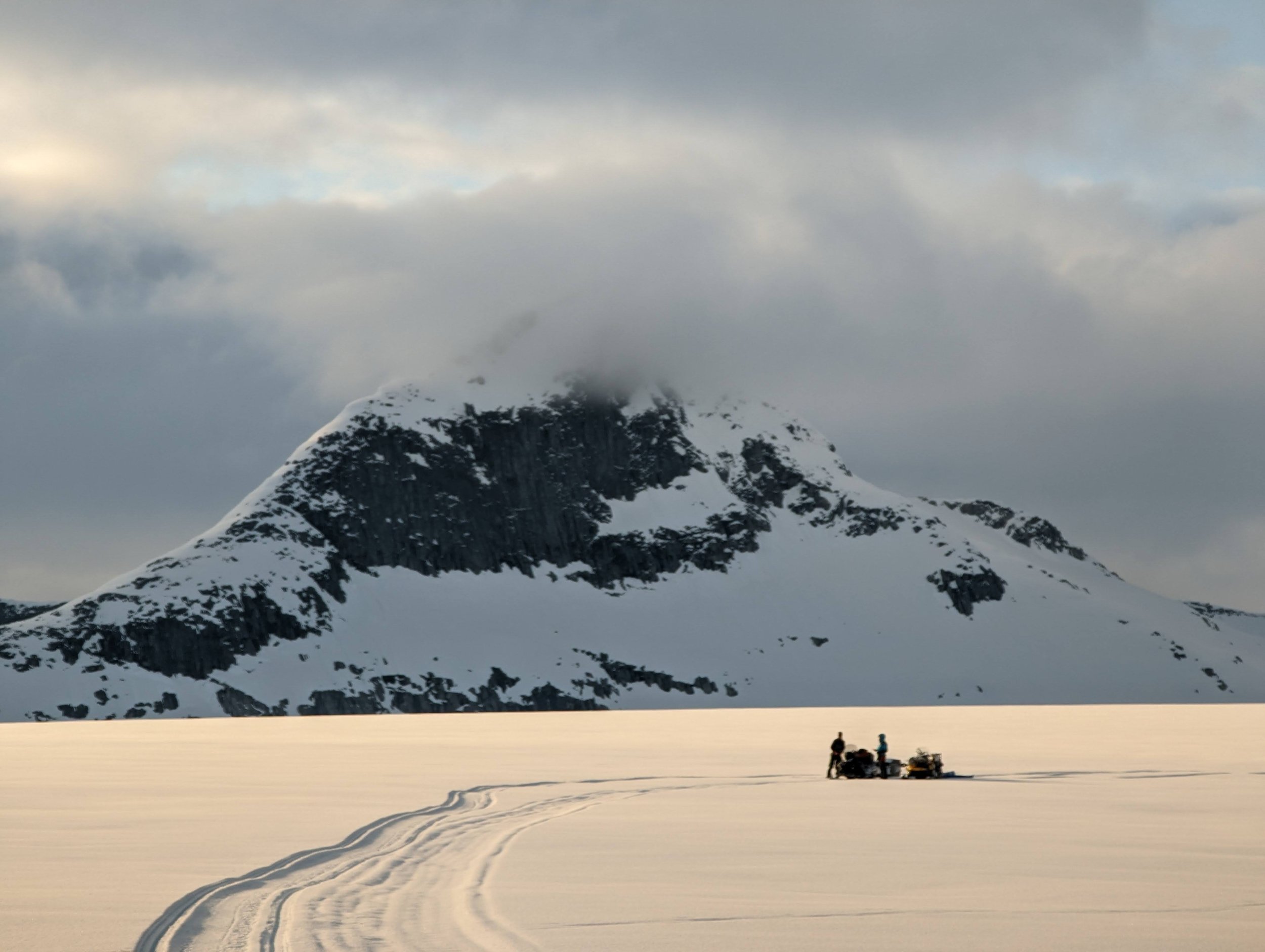
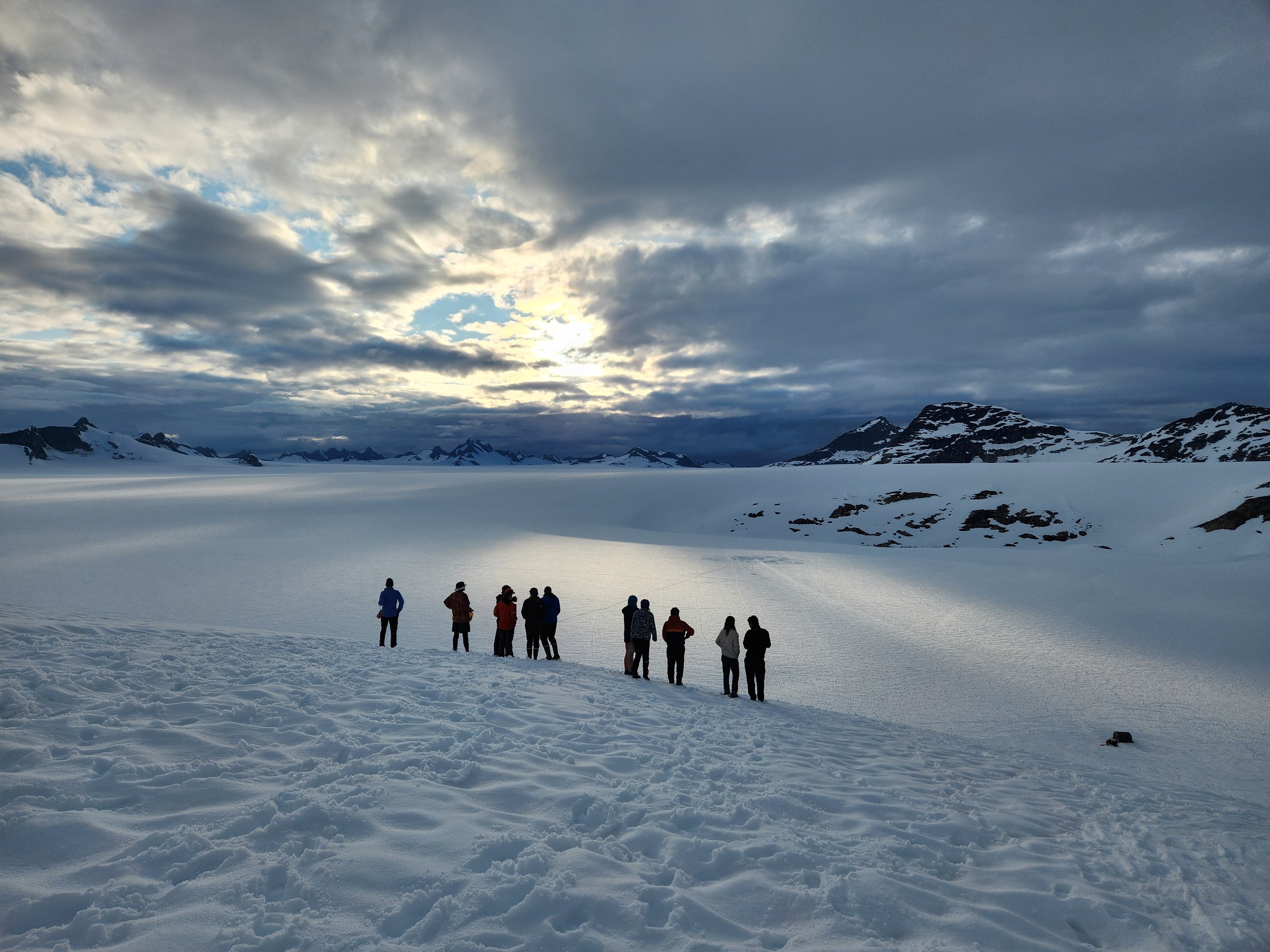
The four-week field season is split between a week in Juneau and 21 days on the Juneau Icefield based out of Camp 10, a permanent Icefield camp. In Juneau, students will first become familiar with their equipment and learn skills required to safely live and work on a glacier. Once on the Icefield, participants will continue to practice their glacier safety skills while integrating into funded research projects for approximately 3 weeks.
Below is a description of the funded research projects that students will have an opportunity to participate in as well as the alpine skills curriculum we teach during the month-long course.
POSSIBLE SCIENCE TOPICS
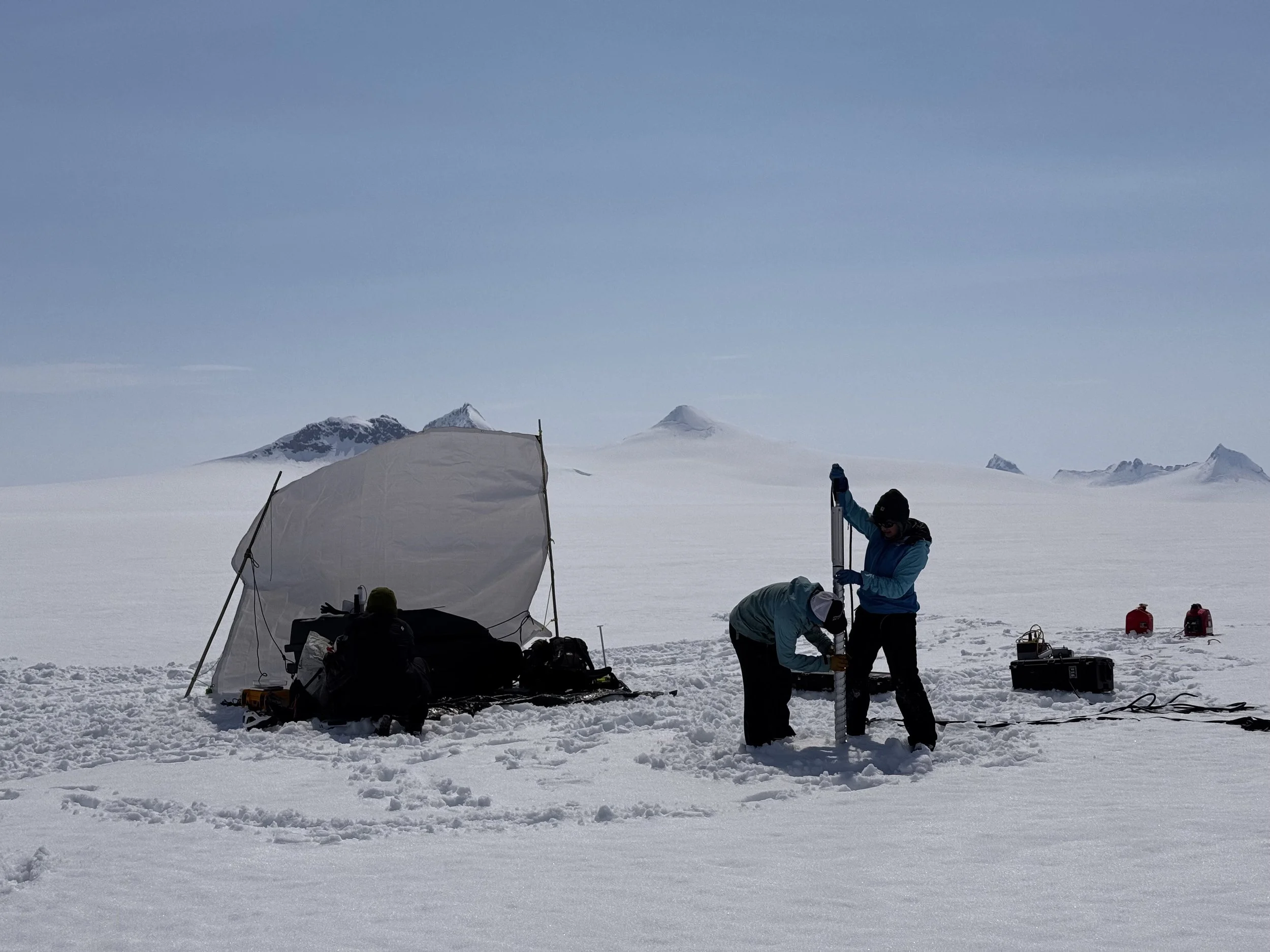
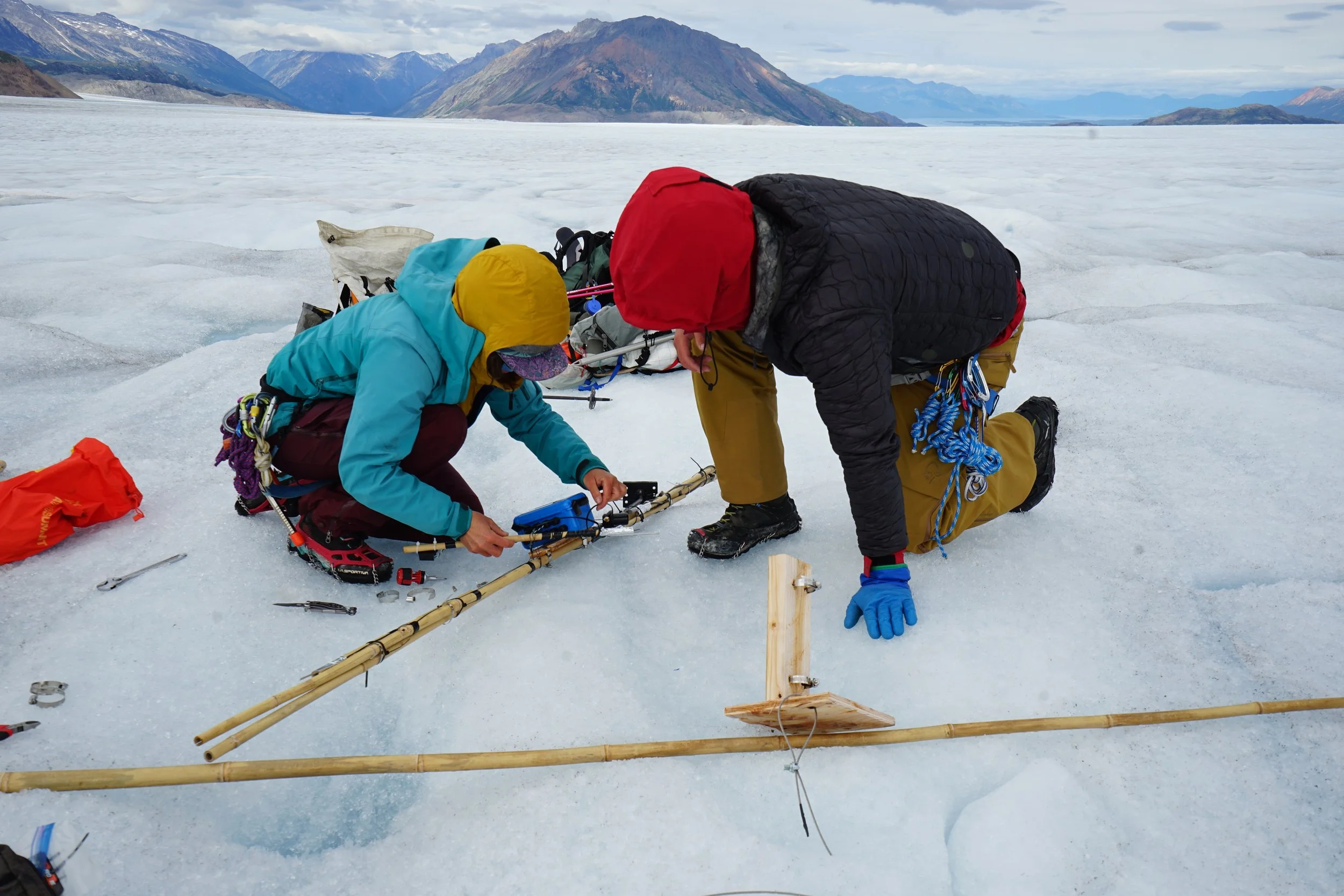
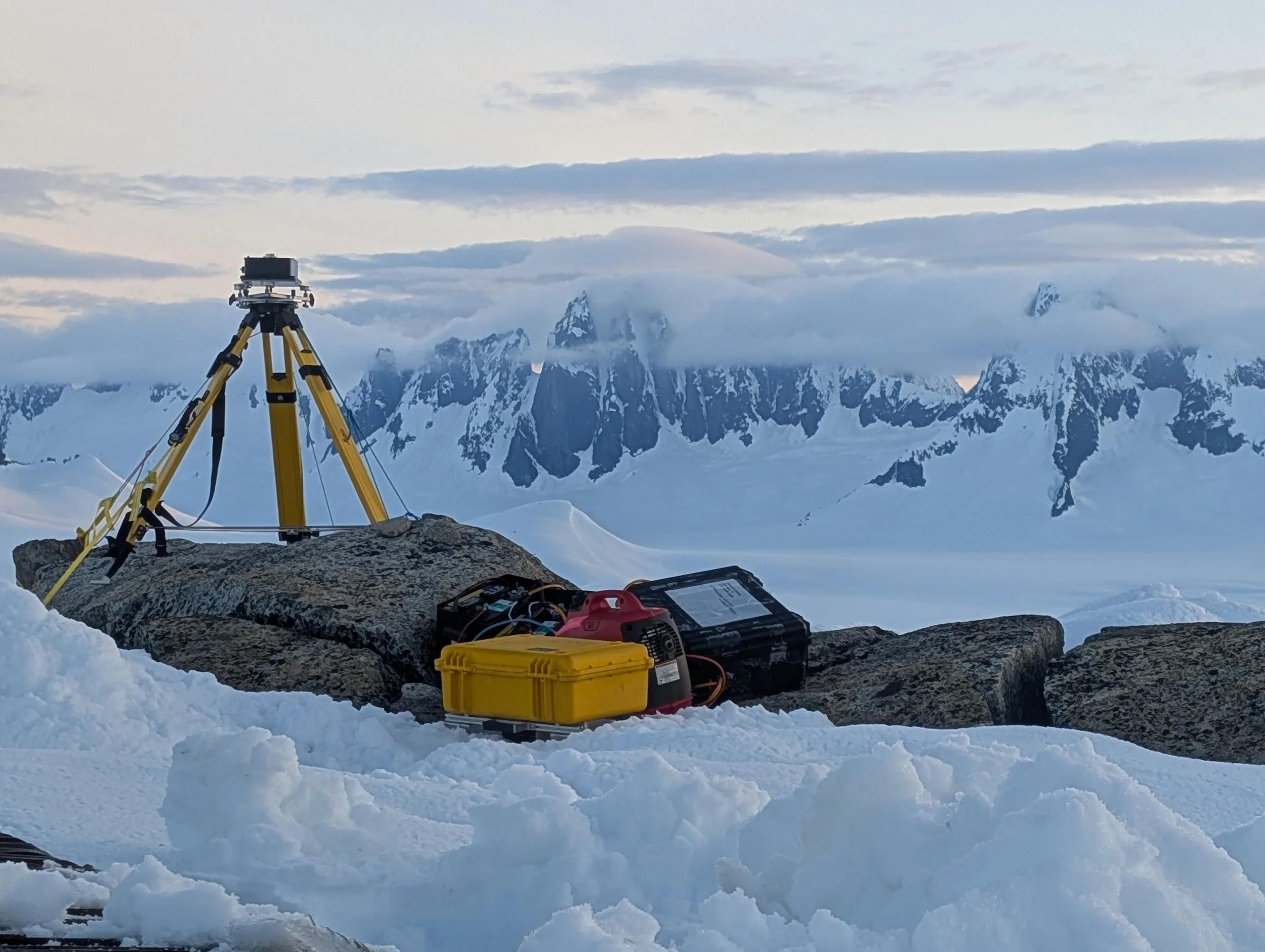
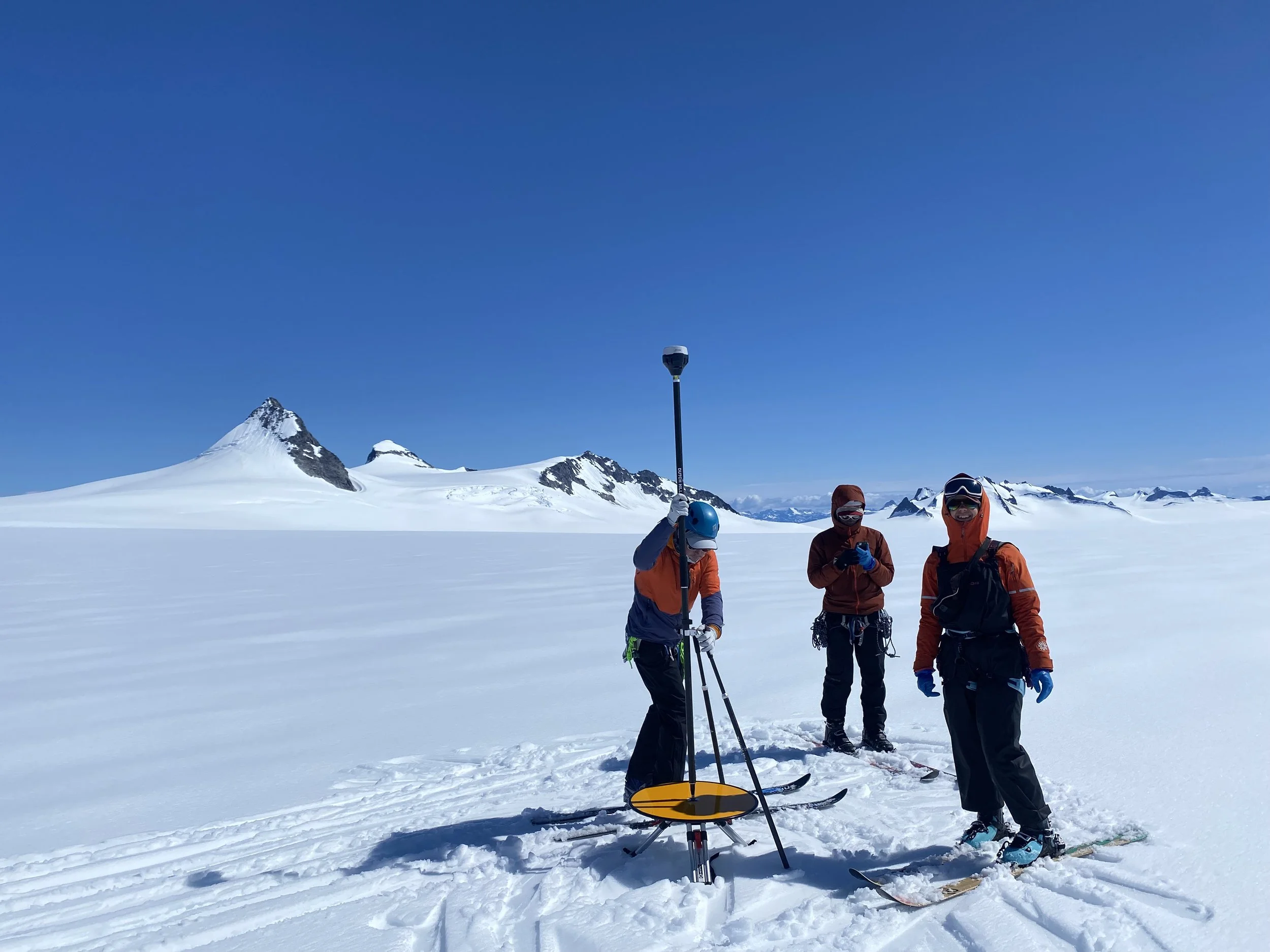
Snow and Firn Evolution: Use a ground-penetrating radar, terrestrial radar interferometry, LiDAR, snow pits, isotope chemistry, and snow/firn cores to measure seasonal and annual changes to snow and firn across the Icefield
Glaciology and Glacier Hydrology: Use deep-penetrating radar systems and a hot water drill to measure ice thickness and englacial/subglacial topography and properties.
Polar Geophysics: Use geophysical instruments such as seismics, radar, distributed acoustic sensing, UAV/Drone LiDAR and multispectral surveys to measure changes to glaciers and the landscape.
Microbiology: Use a hot water drill to reach from surface to bed at depths of 300-400 m to sample for life beneath the ice surface and possibly in sub glacial lake environments.
Landscape Evolution: Use LiDAR, terrestrial radar interferometry, and remote sensing to measure Icefield retreat and dynamic landscape changes.
Atmospheric Sciences: Set up weather stations across the Icefield to link atmospheric conditions to near surface processes related to snow, ice, and landscape evolution.
Polar Sensors R&D: Test new equipment and sensors for various applications in Earth sciences and cryosphere research.
ALPINE SKILLS
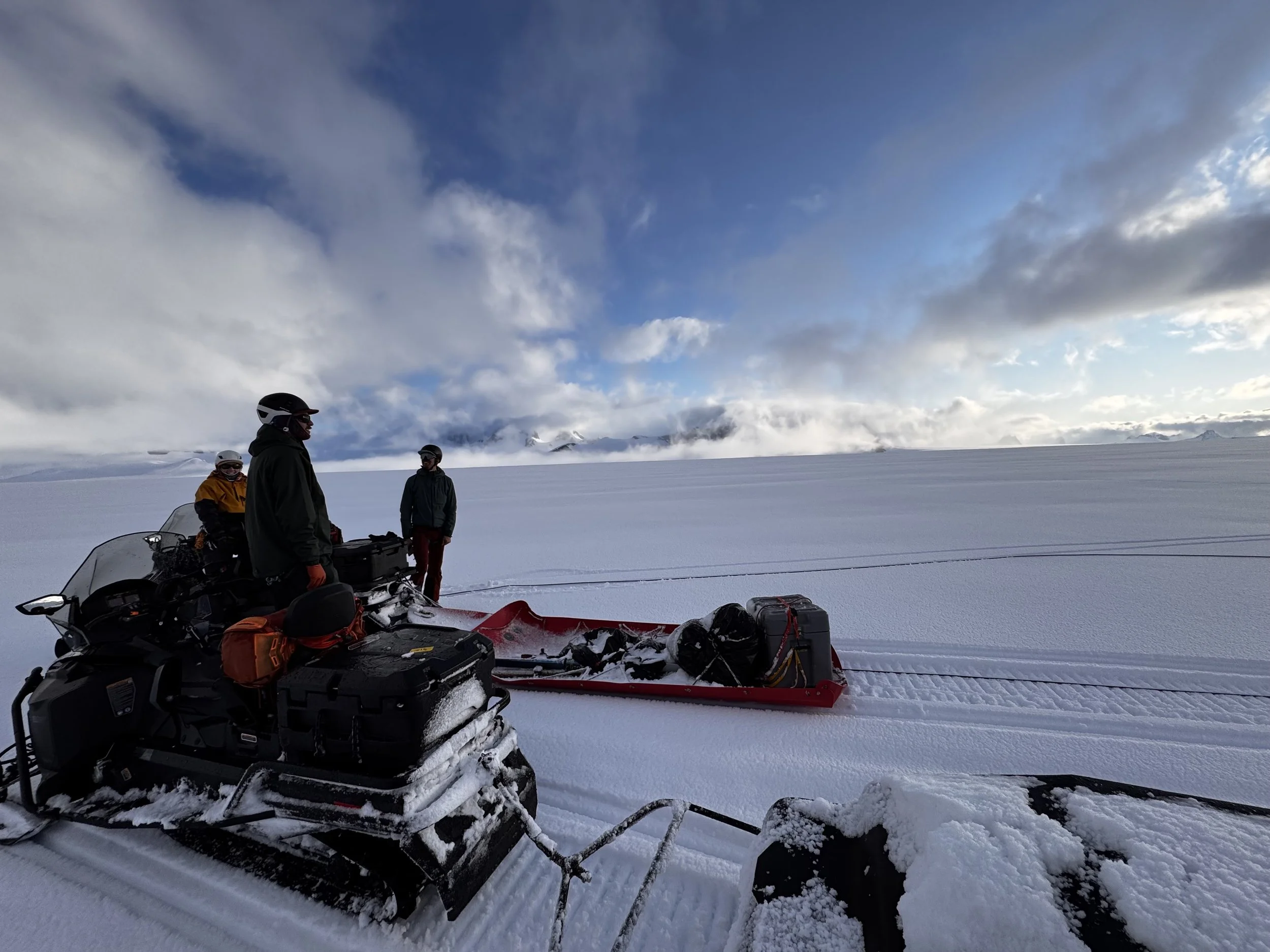
The Graduate Field Course field safety curriculum teaches students how to live and work in alpine and polar environments. Over the one-week field safety training in Juneau, students will learn how to layer appropriately in cold and wet environments, maintain hydration and nutrition, and perform basic wilderness first aid. Students will also learn technical rope skills, crevasse rescue technique, and how to work safely around snowmachines and other over-snow vehicles.
While the first section of the summer is devoted to alpine skills training, students use their skills every day to further their scientific objectives.
For more information on the JIRP field safety curriculum, please view the Undergraduate Field Course Curriculum.
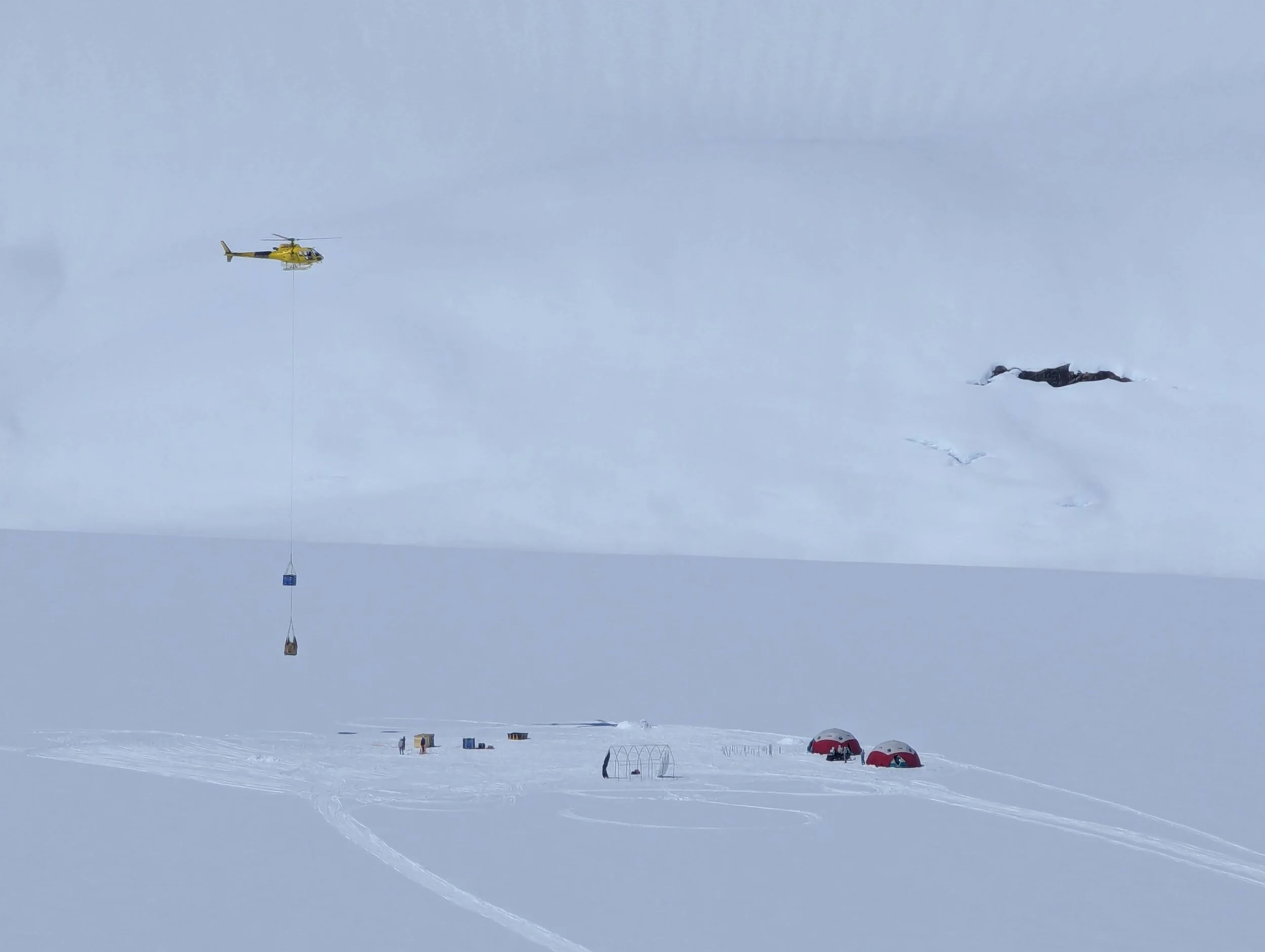
Ongoing research focuses on understanding wet snowpacks and how changes in snow and ice influence land stability, meltwater storage, and water flow on the Icefield. This research is collaborative with teams from the University of Maine, the University of Alaska Fairbanks and Southeast, and the University of Colorado Boulder, and University of Portland among others. By measuring snow depth, density, porosity, and water content, the work improves models that predict how wet snow and melting ice affect hazards such as ground instability and downstream impacts.
Other geophysical equipment and data collection efforts on funded projects include collecting field data using snow pits and cores, ground penetrating radar, terrestrial radar interferometry, airborne LiDAR, and a range of acoustic, electrical, and electromagnetic instruments.
The science also includes testing and validating emerging geophysical tools and combining field observations with modeling and machine learning. These approaches are used to link surface measurements to physical snow and ice properties, providing strong training in field methods, geophysics, data analysis, and modeling for students interested in snow science, glaciers, natural hazards, and climate change.
Graduate Field Course participants will be integrated into ongoing funded projects with PIs and other graduate students. Although students will primarily be involved in funded projects, we encourage students to explore research questions and data collection that combine their own research interests with the science already being carried out on the Icefield. See below for brief project descriptions.
Ongoing research on the Juneau Icefield
Eligibility
We encourage students from a range of STEM backgrounds to apply for the Graduate Field Course. The focus of the research fall under the cryosphere umbrella, but we have opportunities in a range of science topics for students to gain experience. That said, there are a few requirements that must be met for students to attend the Field Course:
Career Stage: Must be a currently enrolled graduate student at any level (Masters, PhD Student, PhD Candidate) or student who will begin their graduate studies in the Fall of 2026 (will need to provide a letter of acceptance into the program).
Citizenship: Must be a U.S. citizen or international student holding a valid U.S. study visa. We hope to expand eligibility to international students in future years.
Passport: Must have a passport because of our proximity to the Canadian border and the possibility of medical evacuation to Canada in an emergency.
Health: Must complete a medical review with both the JIRP medical team and your own care provider. We are unable to accommodate some health conditions including anaphylactic peanut allergies. Please reach out to us if you have questions about your eligibility.
Enrollment: Once accepted, you must enroll at one of our university partners unless you seek an exemption from JIRP’s Director of Research (Seth Campbell).
Background Check: Though not used to make admissions decisions, participants may be required to undergo a background check to take part in data collection and analysis (as a requirement for some of the funded research projects). More information will be offered upon admission.
Course Information
Dates
The 2026 Graduate Field Course ran from June 1 to June 30. We will update this page with additional information about the 2027 Graduate Field Course as it becomes available.
Students are required to be in Juneau for the entire field component of this course.
Between late March-May, participants will meet weekly (virtually). Participants will have the chance to develop project ideas, prepare for their time on the program, and develop background knowledge of the Icefield and ongoing research. Ideally students will attend each online session, but these will be recorded if a session is missed.
Finally, participants will need to present a lesson to high school students between March - December, 2026. See point 2 under the Deliverables section for more details.
Cost
The total cost for the 2026 Graduate Field Course was approximately $4800.
There are three distinct parts of JIRP costs. Field fees are paid directly to JIRP’s parent nonprofit, the Foundation for Glacier & Environmental Research. Tuition is paid directly to one of our university partners. Other expenses are miscellaneous expenses such as travel and gear, which are paid to third-party vendors and are not included in this estimate.
Field Fees
Field fees will cost $3000 for the 2026 Graduate Field Course.
This field fee covers a portion of the costs of operating on the Icefield for three weeks and in Juneau for one week:
Food: All meals and snacks, accommodating most dietary needs. Please contact our staff directly at graduate.course@juneauicefield.org if you have a severe food allergy. We cannot accommodate anaphylactic peanut allergies.
Lodging: Use of permanent field camps and 4-season tents.
Alpine Skills & Academic Instruction: Hands-on training in glacier travel, crevasse rescue, and in-depth mentorship from expert scientists.
Logistic Support & Fuel: Communication (radio/satellite phone), delivery of food/supplies, generator/propane/snow machine fuel, and camp maintenance.
Transportation: All travel (vehicles, helicopters, snowmachines) during the program.
Group Gear & Insurance: Use of camp facilities, scientific equipment, and alpine safety group gear (ropes, stoves, snow pickets, etc.).
Supplies: One field notebook and one fashionable JIRP t-shirt.
Tuition
Tuition will cost approximately $1800 for the 2026 Graduate Field Course.
Each student will receive 3 graduate credits from the School of Earth & Climate Sciences at the University of Maine. Tuition will be paid directly to the University of Maine. Accepted students will receive more information about enrollment later in the spring.
Other Expenses
Outside of the tuition and field fees, participants are responsible for the following:
Travel to and from Juneau, Alaska. JIRP will provide transport to/from the airport and while the course is based in town.
Personal ski mountaineering and general backcountry equipment: This equipment, detailed on the Gear List page, includes field clothing, backpack, sleeping bag, ice axe, and backcountry skis and boots. Please note that the Gear List has not yet been updated with quantities for Graduate Field Course participants.
Health Insurance and/or Travel Insurance: The cost of maintaining your personal health insurance to cover any medical care required as a result of an injury sustained during the program.
Pre- and Post-Program Housing/Meals: All expenses (lodging, food, etc.) for any time spent in Juneau before or after the official program dates. Participants cannot be accommodated at JIRP facilities outside of program dates.
Financial Aid
JIRP is unable to offer any scholarships to attend the Graduate Field Course, but we are happy to support participants in their search for external funding.
We're happy to write letters of support for grants/scholarships.
We can defer enrollment for a year to allow you time to apply for funding.
We maintain a list of potential scholarships and funding opportunities that is updated yearly. Click the button below to open the spreadsheet.
Course Deliverables
As part of the Graduate Field Course, participants will be expected to:
Select a component of the fieldwork where they will collect data and begin preliminary analysis while on the Icefield. This approach allows students to contribute to active research while developing practical skills with scientific equipment and data processing software.
Develop a series of high school lessons that can be shared and presented to local high school students in their community to promote science outreach. These lessons should engage high school students with real world examples of snow, ice, and climate processes while introducing pathways into future STEM careers. We expect each graduate student to deliver these lessons between March - December, 2026, therefore it is possible to develop and deliver lessons before the beginning of the field component of this course. We will help students to connect with high schools to present these lessons and provide resources and help where needed.
Questions?
If you have any questions about the JIRP Graduate Field Course, please email our staff at graduate.course@juneauicefield.org.